|
September is here — the perfect time to clear space, spark change, and grow forward. ͏ ͏ ͏ ͏ ͏ ͏ ͏ ͏ ͏ ͏ ͏ ͏ ͏ ͏ ͏ ͏ ͏ ͏ ͏ ͏ ͏ ͏ ͏ ͏ ͏ ͏ ͏ ͏ ͏ ͏ ͏ ͏ ͏ ͏ ͏ ͏ ͏ ͏ ͏ ͏ ͏ ͏ ͏ ͏ ͏ ͏ ͏ ͏ ͏ ͏ ͏ ͏ ͏ ͏ ͏ ͏ ͏ ͏ ͏ ͏ ͏ ͏ ͏ ͏ ͏ ͏ ͏ ͏ ͏ ͏ ͏ ͏ ͏ ͏ ͏ ͏ ͏ ͏ ͏ ͏ ͏ ͏ ͏ ͏ ͏ ͏ ͏ ͏ ͏ ͏ ͏ ͏ ͏ ͏ ͏ ͏ ͏ ͏ ͏ ͏ ͏ ͏ ͏ ͏ ͏ ͏ ͏ ͏ ͏ ͏ ͏ ͏ ͏ ͏ ͏ ͏ ͏ ͏ ͏ ͏ ͏ ͏ ͏ ͏ ͏ ͏ ͏ ͏ ͏ ͏ ͏ ͏ ͏ ͏ ͏ ͏ ͏ ͏ ͏ ͏ ͏ ͏ ͏ ͏ ͏ ͏ ͏ ͏ ͏ ͏ ͏ ͏ ͏ ͏ ͏ ͏ ͏ ͏ ͏ ͏ ͏ ͏ ͏ ͏ ͏ ͏ ͏ ͏ ͏ ͏ ͏ ͏ ͏ ͏ ͏ ͏ ͏ ͏ ͏ ͏ ͏ ͏ ͏ ͏ ͏ ͏ ͏ ͏ ͏ ͏ ͏ ͏ ͏ ͏ ͏ ͏ ͏ ͏ ͏ ͏ ͏ ͏ ͏ ͏ ͏ ͏ ͏ ͏ ͏ ͏ ͏ ͏ ͏ ͏ ͏ ͏ ͏ ͏ ͏ ͏ ͏ ͏ ͏ ͏ ͏ ͏ ͏ ͏ ͏ ͏ ͏ ͏ ͏ ͏ ͏ ͏ ͏ ͏ ͏ ͏ ͏ ͏ ͏ ͏ ͏ ͏ ͏ ͏ ͏ ͏ ͏ ͏ ͏ ͏ ͏
The GAB GazetteSeptember 2025 Edition
|
|

|
“Wisdom is not a product of schooling but of the lifelong attempt to acquire it.” — Albert
Einstein |
|
|
|
|
You can find previous GAB Gazette editions on our website at: https://thebirrencenter.org/the-gab-gazette We’re always looking for content that matters to you. Please share your feedback and ideas for future GAB Gazette editions with us at newsletter@thebirrencenter.org.
|
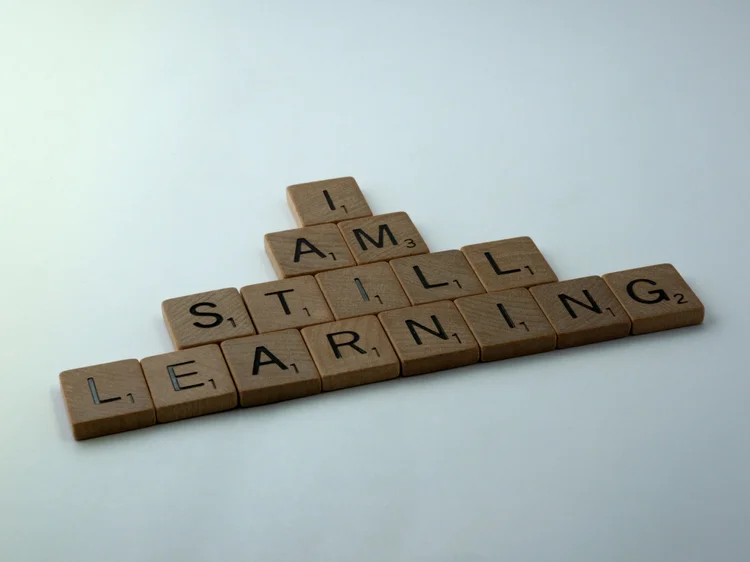
In this Issue:Happenings in The World of GAB Participant Experience Story: Wendy Bancroft Spotlight On: Janet Ferguson Q & A with Dr. James Birren Book Corner: Shelf Worthy Books and Podcasts 🌟 Lifelong learning is not a choice — it is life itself, unfolding
|
|
GAB ChatSeptember 17th, 2025
|
|

|
|
|
|
We're delighted to announce our monthly gathering designed specifically for Guided Autobiography Instructors across the globe. This initiative aims to foster a supportive community while enhancing our professional work through shared experiences and collaborative learning. This month’s meeting details: Date: Wednesday, September 17th Time: 10:00am-11:30 PDT / 1 pm-2:30 ET Subject: Expand Your GAB Toolkit – Info Session on new course offerings at the Birren Center Join us for an informational session introducing three new GAB-compatible courses—each designed to deepen the participant experience and expand your instructor toolkit. Whether you're looking to refresh your current workshops or introduce new narrative frameworks into your offerings, this is your chance to preview what's new. Shaking the Family Tree: with Heidi Thorsen & Sarah White
Explore family stories beyond genealogy in this 5-week course focused on cultural roots, roles, traditions, work, and heirlooms. Perfect for instructors ready to offer a deeper dive into participants’ personal histories. Life Portfolio: Life Reimagined, with Cheryl Svensson & Sheri Kohlmann
Step back and reflect on how your time and energy have shaped your life. This workshop offers writing prompts and tools to help participants assess past choices and realign with their core values for a more fulfilling future. Tasting the Past: Flavors of Memory, with Janet Ferguson
Harness the power of food and memory. This 5-week course uses sensory writing to explore identity, cultural heritage, and connection—perfect for GAB instructors looking to integrate cuisine into storytelling. Please feel free to send your questions ahead of time to Heather: heatheraknox@gmail.com
We hope to see many of you there! Note: Save this email for quick access to the GAB Chat on September 17th. When it’s time to join, simply click the button below to enter the meeting.
|
|

|
Be a Guest Host in the GAB Forum – Help Build Our GAB Community Hub! |
|
|
|
|
Dear GAB Community, Are you passionate about Guided Autobiography and excited to help create a more vibrant, connected community? We’d like to invite you to be part of a trial opportunity as a Guest Host in the Birren Center Community Forum, one-month at a time. As an incentive, we’ll give 50% off your annual subscription to the Birren Center Community Hub. This initiative is part of our exploration into proactive engagement and peer leadership within the GAB Forum. It’s your chance to make an impact, bring your voice forward, and inspire others along the way. As a Guest Community Host, You’ll: Ignite Engagement: Spark meaningful conversation and connection within the Forum Shine a Spotlight: Highlight GAB programs, events, workshops, and published works from fellow GAB instructors Guide the Conversation: Initiate weekly themes and prompts Be a Bridge: Offer insights and feedback to the Birren Center Board on behalf of the community. This is a trial, but we encourage you to help shape the future of our online community space.
If you're interested in being part of this initiative, email Cheryl at cheryl@thebirrencenter.org, and we’ll be in touch with next steps. Step forward. Inspire connection. Lead the way.
|

|
Second Chances: Lives Change, One Story at a TimeGAB Instructors and students whose submission was accepted for the 2025 "Second Chances” anthology have received the publishing agreement—the final step in assuring each essay appears in the anthology as planned. As the book moves into the production step, it’s time to start preparing for book sales this fall. Our planned publication date is November 15, 2025. The book launch team is forming and all co-authors in this Anthology play a key role in assuring our book reaches readers and moves hearts. Soon they will receive resources to help them plan for a book launch in their communities. Press releases, activity checklists, ideas for event ideas will be provided soon. Sarah White, 2025 Anthology Project Manager, welcomes volunteers who would like to be part of the book launch team. Email her at sarah@thebirrencenter.org. |
|
|
|
Participant’s Experience: Wendy Bancroft |
|

|
|
|
|
In the fall of 2020, I was leading GAB workshops online for Simon Fraser University’s 55+ program. I got a call from the program office saying they’d been contacted by a member of Vancouver’s Second-generation (2G) Holocaust Survivors’ community. They had heard the program had an instructor leading workshops designed to help people write about meaningful times in their life. Would I be interested in leading workshops for them? The 2G community had participated in various projects honoring the first generation and preserving their parents’ memories. They were now wanting to write about what it was like to grow up living with this traumatic legacy. I did not grow up as a Jew but, from the time I was 17, I’d known that my birth father was Jewish. And while my mother should have told me this kind of information long before I turned 17, she made sure I grew up with an appreciation of Judaism—largely through popular culture. I was thrilled to be asked. Yes. Of course I would lead workshops for this community. I had no idea the degree to which becoming involved with these stories and this group of people would change my life. To begin with, while the basic Birren syllabus is excellent for stimulating memory and conversation about life as most of us know it, this was life in the context of a very traumatic history and impact. I insisted on beginning with a theme that leant itself to developing a timeline, but we went with Family Matters rather than Branching Points. We used The Meaning of Work, Spirituality (and Identity), and Death and Dying but, and especially as more members joined and returned for more GAB, we added other themes of a more psychological nature like Love and Intimacy, Resilience, and Embracing Vulnerability. In the end, the workshops included 12 people and went on for two years. They were a dynamic and closely bonded group. The stories went deep but were also at times funny, and always poignant. At some point, apparently, I said, “Hey, these are powerful stories. You guys should consider an anthology!” I did think the stories were outstanding and special but didn’t expect they would take me seriously. They did. And I ended up editing some 50 stories that are now, three years later, soon to be published in an anthology called Voices of Resilience: An Anthology of Stories Written by Children of Holocaust Survivors. The authors' stories include the ones they wrote in GAB, with each author adding the story of their parent(s)' survival. The anthology also includes photographs, a historical context, a foreword by internationally known psychiatrist and child survivor Dr. Robert Krell, a glossary, and a list of annotated recommended works. It is being published by Amsterdam Publishers, a Netherlands-based publisher specializing in stories dealing with the aftermath of the Holocaust. And notably, GAB gets enormous kudos. 2G coordinator and anthology editor, Deborah Ross-Grayman, says the anthology would never have come to fruition without GAB. She attributes much of the raw authenticity of these stories illustrating intergenerational transmission of trauma and resilience to the GAB process. She says this in the preface; I write about GAB in the appendix. The book launch is scheduled for May of 2026. Preorders will be taken for the book beginning April 1st.
|

|
New Ways to Use the GAB Writing Program: 2026 Spring Retreat in Sayulita, Mexico Planning is underway for a unique five-day immersive writing retreat at the luxurious Corazón Retreat Center in Sayulita, Mexico, March 8–14, 2026. Hosted by Heidi Thorsen and Heather Knox, with guest speaker Dr. Cheryl Svensson, this retreat introduces a fresh approach to the Guided Autobiography (GAB) method—using the five senses to deepen life story writing. Participants will step away from daily routines to focus on life’s turning points, bringing memories to vivid detail through sensory exploration. The program includes activities designed to spark sensory awareness, private writing time, and opportunities for sharing and connection. Additional highlights include discovering the richness of local culture with artisan presentations and curated excursions into town. Enrollment is limited to 12 participants to ensure an intimate, supportive environment. To join the interest list and receive updates on registration, itineraries, and details, please contact Heidi tyememoirwriting@gmail.com or Heather heatheraknox@gmail.com. This is your chance to refresh your writing, discover new insights, and discover the vibrant community of Sayulita. |
|
|
|

|
Spotlight OnJanet Ferguson |
|
|
|
|
THE MANY FLAVORS OF JANET FERGUSON By Barbara Smith Janet Ferguson’s journey as a facilitator, educator, and advocate for narrative work is a testament to the transformative power of storytelling. Her many endeavors, including a successful strategy development consulting practice, exemplify the spirit of GAB: fostering community, creativity, and purpose through the art of storytelling. Living in Bermuda with a career that has spanned the UK, Tobago, the Cayman Islands, the US, and beyond, Janet’s work is characterized by innovation, empathy, and a deep commitment to reframing aging through story work. Her connection to GAB began with her training in 2020, but her engagement with life writing and narrative work stretches back much further with involvement in programs that encourage individuals to reflect on and share their life stories. Her early work with the StoryCenter, an organization renowned for pioneering digital storytelling, laid the foundation for her approach. There, she co-taught workshops like “Walking Back the Long Road” and “Signpost Stories,” both of which mirror the GAB model by guiding participants through themed writing sessions, culminating in the publication of a collective journal. A significant portion of her career was spent as Executive Director of the Lifelong Learning Center in Bermuda, where she focused on reframing aging and developing programs for adults over 55. Using Jim Birren’s research, which she discovered long before her formal GAB training, and other inspirations such as Julia Cameron’s “morning pages,” her courses provided older adults with opportunities to make sense of their lives through storytelling, fostering both personal insight and community connection. Her “Tasting the Past: Flavors of Memory,” a pioneering 5-week GAB workshop, uses food as a lens for exploring family, migration, and identity. Recognizing the challenges of self-disclosure in small communities, Janet found that writing about food allowed participants to address sensitive topics in a safe, metaphorical way. The workshop, which she presented with a co-facilitator, guides participants through prompts such as recalling early food memories, mapping significant food events, and exploring the role of food in celebrations and rituals. The result was a tapestry of stories that foster both reflection and connection, touching on migration, intergenerational relationships, and cultural adaptation. The workshop concluded with a “screening,” where participants shared their stories in a supportive, non-judgmental environment—sometimes accompanied by the very foods that inspired their writing. “I love the fact that the GAB programs, whether you're doing “Tasting the Past” or you're doing all the traditional GAB, it's bringing wisdom to service for legacy,” she says. Beyond that, the group-based approach is key. “Being in relationship at this stage of one's life -- cultivating relations, being effective in them -- that's what's important. And to me, GAB is a practice space where all that can come in.” For new GAB instructors seeking ideas for marketing their classes, Janet emphasizes the importance of partnerships with venues like libraries, museums, and community centers, which can help with recruitment and promotion. She also advocates for immersive, low-pressure storytelling activities such as inviting people at a dinner or church gathering to share a favorite food memory as a way to spark interest in more structured workshops. At the heart of Janet’s work is a profound respect for the dignity and wisdom of older adults, believing that storytelling is a restorative practice that enables individuals to make sense of their experiences and leave a legacy for future generations. GAB, she says, is uniquely positioned to support this process, offering a space for participants to tap into both cognitive and emotional development and discover new creative capacities. Her passion for narrative work is matched by her commitment to genuine listening and openness. She encourages instructors to be generous listeners, and to create a space where participants feel truly heard. To sample Janet’s contagious enthusiasm and ability to stimulate evocative writing, watch her YouTube video, “Crafting a Personal Story by Dr. Janet Ferguson,” part of the Tracing Our Roots/Routes, sponsored by the National Museum of Bermuda.
|
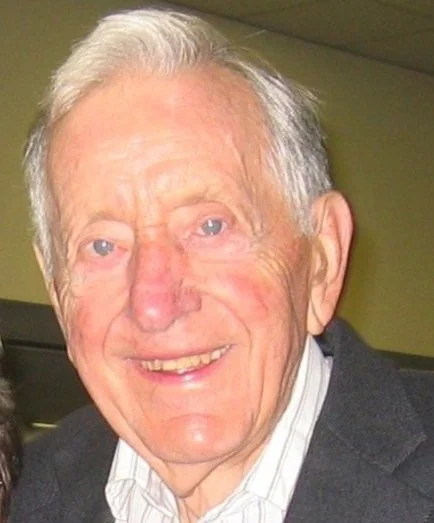
A Series of Q & A with Dr. BirrenAs our founder and friend through GAB, Dr. James Birren had many words of wisdom to share with GAB instructors. Through an online Q & A series with Dr. Cheryl Svensson during her GAB online instructor training sessions from 2010 to 2015, he answered questions from GAB instructors. You may find that you have similar questions. His answers are as relevant and helpful today as they ever were. This is the fourth in a series of installments devoted to the Birren Q & A. |
|
|
|
|
Dr. Birren on Learning across the generations: Question for Dr. Birren: What is the ideal age for a person to benefit from GAB? Dr. Birren’s Answer: Any age! Here at University Village I had a GAB class that included psychology students from Cal Lutheran University who participated with the older adults. Their stories interested the older members and the young people were moved to hear of all the things the older people had lived through. With increased heterogeneity it may take longer for bonding to grab hold, but once it does, it is very strong. The young and old, men and women all add to the mix. Also ethnic and religious diversity helps. After 3-4 sessions the group effect takes hold and then it is very rich. Question for Dr. Birren: Would you talk a little about intergenerational GAB groups? Dr. Birren’s Answer: I like intergenerational GAB groups because I find them very stimulating. It invigorates older people to become volunteers and mentors to younger students. The younger students stimulate the older adults. Older people have backed away from heavy responsibilities, their children are grown and out of the house, they have more free time on their hands and the freedom to ask, “What do I want to do with the rest of my life?” An intergenerational group helps to ‘release’ the potential a bit more. Question for Dr. Birren: Do you think that any of the recent research on the brain's continual propagation of new cells affects the conclusions on the earlier research on the decline in cognitive functions with aging? Dr. Birren’s Answer: I don’t think it changes the context very much. Listening to other people’s stories primes your own memory of the past. Others ask you questions about your life story and that increases the focus for you. The idea is to interact regarding autobiography and get the full richness out. Professor Emeritus James E. “Jim” Birren, the founding dean of the USC Leonard Davis School of Gerontology and an aging-research pioneer considered by many to be the father of modern gerontology, passed away on January 15, 2016, at the age of 97. Remembering James E. Birren
|
|
Shelf-Worthy: Top Picks for Life Story Writers A collection of books on the craft of writing and the benefits of life story writing is an invaluable resource for GAB instructors. Ever had that moment when you needed a bit of wisdom or a curated perspective for inspiration as you planned your next class? Or perhaps a class member asked for recommendations for a great memoir? Let’s build our own GAB Book Resource List! We’re gathering recommendations for the best books on life story writing and memoir to create an annotated bibliography that all GAB instructors can benefit from. How You Can Help: If you’d like to contribute, we’d love your help! Email us at admin@thebirrencenter.org, and we’ll put you to work on this exciting new project. This Edition’s Top Picks
|
The Story You Need To Tell : Writing To Heal From Trauma, Illness, or Loss, by Sandra Marinella, MA, MEd: "Informed by the author's pioneering work with veterans and cancer patients, and her years of teaching writing and researching its healing properties, The Story You Need to Tell is a practical and inspiring guide to transformational personal storytelling. Riveting true stories illustrate Marinella's methods for understanding, telling, and editing our own stories in ways that foster resilience and renewal. Marinella also shares her own experience of using journal and expressive writing to navigate challenges including breast cancer and post-partum depression. Each of the techniques, prompts, and exercises she presents work to "unravel the knot inside and to make sense of loss." Based on a profound understanding of how "in our sadness and pain we can be remade," this is the kind of storytelling - and the kind of book - that can change and perhaps even save a life"-- Provided by publisher. Shelf Worthy Suggestion from Angela Turner, GAB Instructor “It helped me to come up with new flash writing prompts.” |
|

|
|
|
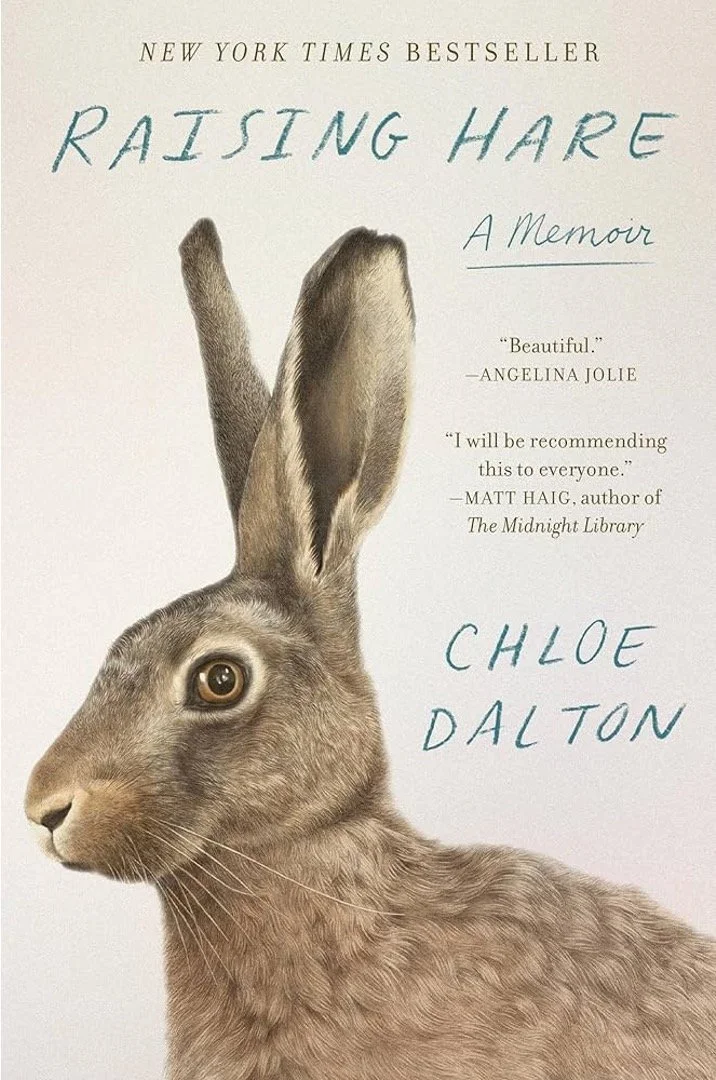
Raising Hare, by Chloe Dalton: Chloe Dalton’s Raising Hare is a tender, beautifully written memoir of an unexpected bond between a political advisor and a wild hare. During lockdown, Dalton rescues a newborn leveret, intending only to keep it safe until it can return to the wild. Instead, it becomes her nocturnal house guest, bounding in from the fields to sleep at her side. Blending natural history, folklore, and personal reflection, Dalton explores what it means to love something wild while letting it go. Heartfelt and wise, Raising Hare is a reminder that wonder often arrives unplanned—and that freedom is the greatest act of care. |
|
|
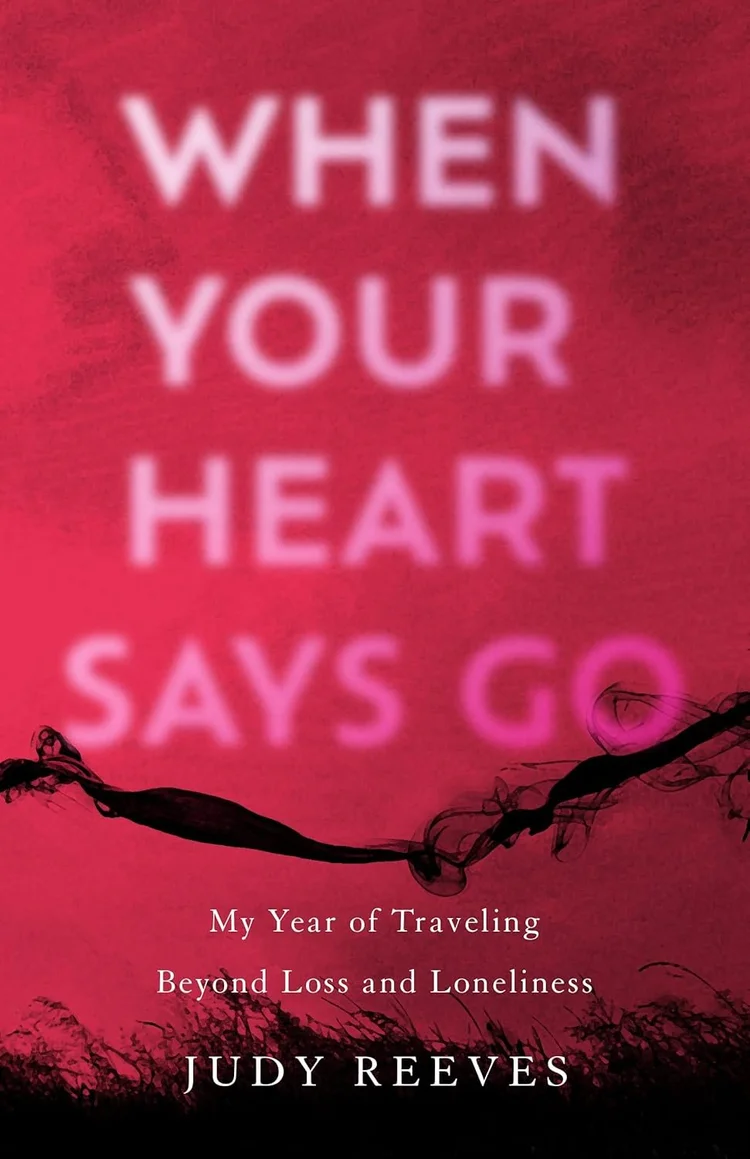
When Your Heart Says Go by Judy Reeves: What kind of longing drives a woman—nearing fifty, newly widowed—to sell everything, pack a single suitcase, and set off alone on a yearlong journey with no itinerary? When Your Heart Says Go, reads like a beautifully written novel but it is Judy’s own story of heartbreak, resilience and self-discovery following the death of her beloved husband. Set in 1990–91, her travels take readers from San Diego across eleven European countries, into the then-Soviet Union, and finally to India, all against the tense backdrop of the impending Gulf War. Along the way, encounters with strangers and new friends provide moments of connection, safety, and wonder, while memories of her late husband, Tom, and the pain of his illness and death provide poignant counterpoint. Blending descriptions of historic sites, daily adventures, and moments of quiet self-discovery, Judy’s journey is both external and deeply internal. The more of the world she sees, the more she uncovers her own resilience, independence, and creative voice. Ultimately, When Your Heart Says Go is a story about transformation, healing, and the courage to follow one’s heart into the unknown—even when it means starting over, completely alone. Shelf Worthy Suggestions from Roselyn O’Connell, GAB Instructor |
|
|
|
|

|
For the Memoir-Minded: What to Listen to & WhyIt seems everyone these days is talking about and listening to podcasts. One report notes approximately 450,000 active shows in the U.S. Most podcasts are free, easy to access on phones and available on-demand. It is an easy way to learn on the go. Perfect for busy GAB instructors. That is why we went looking for memoir and writing podcasts. We found some that you might like. The following podcast hosts and guests offer practical advice and share their own experiences in meeting the challenges of staying with the writing and helping others write their stories. When you are out walking, doing tiresome household chores, driving to a dental appointment or thinking about your next class, try listening to one of the following podcasts for inspiration. Happy listening. |
|
|
|
|
Memoir Nation (formerly Write-Minded): Hosted by Brooke Warner and Grant Faulkner, Memoir Nation delivers weekly inspiration for memoir and personal writing. It combines industry trends, writing tips, and segments like "Book Alley", highlighting recent memoirs that spark inspiration. Active since 2018, it has amassed over 200 episodes. Listen Here: Memoir Nation Memoir Club: Hosted by Wayne Jordan, GAB Instructor, Memoir Club is a monthly podcast (and resource hub) aimed at memoir writing, personal storytelling, family history, and legacy building. Great for beginners looking to preserve family stories or start a full memoir. Listen Here: Memoir Club Writer Unleashed: Hosted by Nanci Panuccio, Writer Unleashed is a weekly show for both fiction and memoir writers, diving into story techniques, writing craft, and the mindset needed for sustained momentum. Listen Here: Writer Unleashed Capturing Essence for Care: Hosted by Lisa Joworski, GAB Instructor, Capturing Essence for Care is a podcast that focuses on the importance of incorporating personal life stories into health care to ensure we are seen as people first, before seen as patients, residents or clients. Guests and listeners share insights from their own knowledge and experiences about what "capturing essence" looks like to them, whether through writing, video, voice, visuals or other forms of storytelling. Dr. Cheryl Svensson, Director of the Birren Center, is an upcoming guest. Listen Here: Capturing Essence for Care Voices of GAB: We want to give a shout-out to fellow GAB Instructor, TEDx Speaker, and Legacy Advocate Emma Fulenwider for her inspiring feature on a recent Sherrie Eldridge podcast episode, Becoming Yourself in the Middle of Motherhood. In the conversation, Emma beautifully spotlights the Birren Center and the profound impact of the Anthology series on both collaborators and readers. She reminds us that storytelling is more than reflection—it’s legacy work at its core. Listen to Emma’s Interview. If you have a recommended podcast or you yourself were interviewed for a podcast please send it to us. We will be updating this series in the future.
|
|
The Classroom Called Life: Lessons in Lifelong LearningAlice Gaddi Roselo |
|
|
|
|
|
September often signals new beginnings. In many parts of the world, it is the season when children return to school with sharpened pencils, fresh notebooks, and eager hearts. For us in the Guided Autobiography (GAB) community — many of whom are long past our formal school years — September reminds us that the classroom never truly closes. Life itself is our ongoing school.
Every stage — from childhood dreams to midlife pivots to later years of reflection — offers new lessons waiting to be learned. Sometimes these lessons come as gentle whispers: the patience of tending a garden, the joy of learning a new skill, or the quiet wisdom of listening deeply to a friend. At other times, life teaches through tougher exams: illness, loss, global crises, or personal failures. And yet, we keep learning, because learning is what keeps us alive, open, and growing. Lifelong learning is not just about information; it’s about transformation.
When we try something new — a class, a technology, a craft, or even sharing our stories in a GAB circle — we reawaken the curiosity of our younger selves. Neuroscience now confirms what many of us experience daily: that the brain thrives on novelty and challenge, no matter our age. To learn is to stretch our minds and spirits, proving that growth does not retire. Recently, I have been learning from best story-sharing practices in GAB chats. At the same time, I’ve started (at 67) exploring foreign exchange trading to grow my savings and experimenting with generative AI for daily tasks. The GAB method reminds us that our stories are also our teachers.
Each time we write and share a memory, we uncover lessons we didn’t know we had learned. A story of childhood failure may reveal resilience. A tale of caregiving may highlight compassion. Even a travel reflection — like encountering a circular-designed church abroad that recalls one’s college chapel and the informal lessons once held there — can stir forgotten wisdom. Even a narrative of regret can teach us forgiveness. In this way, every life becomes a textbook, and every story a lecture worth hearing. As we step into September, let us honor both the school of life and the spirit of lifelong learning. Whether we are in our 50s, 70s, or 80s, the invitation remains the same: stay curious, keep learning, and share the wisdom your life has already taught you. After all, diplomas fade, but the lessons of life from a one and only you — and stories written and shared— endure forever.
|
|
|
Using Learning Style Insights to
Enhance Guided AutobiographyAngela Turner |
|
|
|
|
Understanding how we acquire, process, and recall information can be a powerful tool for both guided autobiography facilitators and participants. Personality-informed learning profiles can highlight strengths and challenges that directly influence the storytelling process. For example, I was an INTJ learner. It says these people are driven by the question “Why?” They seek to connect life experiences and information to larger patterns or purposes. In a GAB setting, this can mean they thrive when themes are linked to deeper meaning—such as exploring why a life event mattered and how it connects to the bigger picture of their personal narrative. My Learning style also prefers structured, goal-oriented work and benefits from time to process ideas before sharing. Facilitators can support them by providing session outlines in advance, encouraging reflective pauses, and using visual aids to anchor memory recall. Since INTJs may retain “big picture” concepts more easily than small details, prompts that guide them toward sensory or emotional recollections can help fill in finer nuances of their stories. This type of learning insight can also alert facilitators to potential barriers. For instance, my style has a lower auditory learning preference and may struggle to retain material from purely verbal discussion. Adjustments—such as offering written prompts, diagrams, or mind maps—can make participation more comfortable and fruitful. From the facilitator side, I request to have stories sent to me in advance so that I can process them before they are read aloud. When participants understand their own learning patterns, they can adapt how they approach story creation, editing, and sharing. Similarly, facilitators can use this awareness to design more inclusive, personalized sessions—making guided autobiography not only a journey of memory, but a process that meets each storyteller exactly where they learn best. Try it out for yourself: learningstylequiz.com 🌟 Bonus for Community Hub Members!New Resources Available This Month Visit the Community Hub to explore new resources with a focus on different learning styles and how they shape the Guided Autobiography experience. These tools are crafted to support your growth as an instructor and enrich the experience of your participants. Don't miss them!
|
“The love of learning, the sequestered nooks,
And all the sweet serenity of books”
― Henry Wadsworth Longfellow
|
|
The GAB Gazette is a bi-monthly
publication from the Birren Center. GAB Gazette Team Editor: Cheryl Svensson Contributors: Melissa Coats, Ansley Dauenhauer, Alice Gaddi Roselo, Roselyn O’Connell, Barbara Smith, and Angela Turner
|
|
|
|