|
When the World Gets Loud, Summer Whispers ‘Be Still’ ͏ ͏ ͏ ͏ ͏ ͏ ͏ ͏ ͏ ͏ ͏ ͏ ͏ ͏ ͏ ͏ ͏ ͏ ͏ ͏ ͏ ͏ ͏ ͏ ͏ ͏ ͏ ͏ ͏ ͏ ͏ ͏ ͏ ͏ ͏ ͏ ͏ ͏ ͏ ͏ ͏ ͏ ͏ ͏ ͏ ͏ ͏ ͏ ͏ ͏ ͏ ͏ ͏ ͏ ͏ ͏ ͏ ͏ ͏ ͏ ͏ ͏ ͏ ͏ ͏ ͏ ͏ ͏ ͏ ͏ ͏ ͏ ͏ ͏ ͏ ͏ ͏ ͏ ͏ ͏ ͏ ͏ ͏ ͏ ͏ ͏ ͏ ͏ ͏ ͏ ͏ ͏ ͏ ͏ ͏ ͏ ͏ ͏ ͏ ͏ ͏ ͏ ͏ ͏ ͏ ͏ ͏ ͏ ͏ ͏ ͏ ͏ ͏ ͏ ͏ ͏ ͏ ͏ ͏ ͏ ͏ ͏ ͏ ͏ ͏ ͏ ͏ ͏ ͏ ͏ ͏ ͏ ͏ ͏ ͏ ͏ ͏ ͏ ͏ ͏ ͏ ͏ ͏ ͏ ͏ ͏ ͏ ͏ ͏ ͏ ͏ ͏ ͏ ͏ ͏ ͏ ͏ ͏ ͏ ͏ ͏ ͏ ͏ ͏ ͏ ͏ ͏ ͏ ͏ ͏ ͏ ͏ ͏ ͏ ͏ ͏ ͏ ͏ ͏ ͏ ͏ ͏ ͏ ͏ ͏ ͏ ͏ ͏ ͏ ͏ ͏ ͏ ͏ ͏ ͏ ͏ ͏ ͏ ͏ ͏ ͏ ͏ ͏ ͏ ͏ ͏ ͏ ͏ ͏ ͏ ͏ ͏ ͏ ͏ ͏ ͏ ͏ ͏ ͏ ͏ ͏ ͏ ͏ ͏ ͏ ͏ ͏ ͏ ͏ ͏ ͏ ͏ ͏ ͏ ͏ ͏ ͏ ͏ ͏ ͏ ͏ ͏ ͏ ͏ ͏ ͏ ͏ ͏ ͏ ͏ ͏ ͏ ͏ ͏ ͏
The GAB GazetteJuly 2025 Edition
|
|

|
“Stillness is not about focusing on nothingness; it’s about creating an emotional clearing to allow ourselves to feel, think, dream, and question.” — Brené Brown |
|
|
|
|
You can find previous GAB Gazette editions on our website at: https://thebirrencenter.org/the-gab-gazette We’re always looking for content that matters to you. Please share your feedback and ideas for future GAB Gazette editions with us at newsletter@thebirrencenter.org.
|
In this Issue:News from the Birren Center Participant Experience Story: Angela Turner Spotlight On: Stephanie Bloom Q & A with Dr. James Birren Book Corner: Shelf Worthy Books Personal Reflection Tool
|
|
Join fellow Guided Autobiography Instructors from around the world for our monthly professional development gathering. This collaborative meeting provides an invaluable opportunity to connect with peers, share insights from your teaching experiences, and strengthen our global community. This Month’s Meeting Details Keynote Speaker: Teresa Townsend Subject: Photographs and Guided Autobiography Photos help to tell the story! They are an invaluable resource in Teresa's work with individuals and in her GAB classes. Teresa will explain how she incorporates photos with GAB and will share a few tools and tips for working with photographs. When: Wednesday, July 16th at 10:00 AM PDT
Duration: 90 minutes
Format: Virtual meeting via Zoom These GAB Chats are designed to foster meaningful connections while advancing our professional practice through collaborative learning and shared experiences. Whether you're a seasoned instructor or new to the field, you'll find valuable opportunities to learn, contribute, and grow within our supportive community. We look forward to seeing you there and hearing about your recent experiences. If you have any specific questions you’d like addressed at our upcoming GAB Chat, please email Heather at heatheraknox@gmail.com We hope to see many of you there!
|
|
|
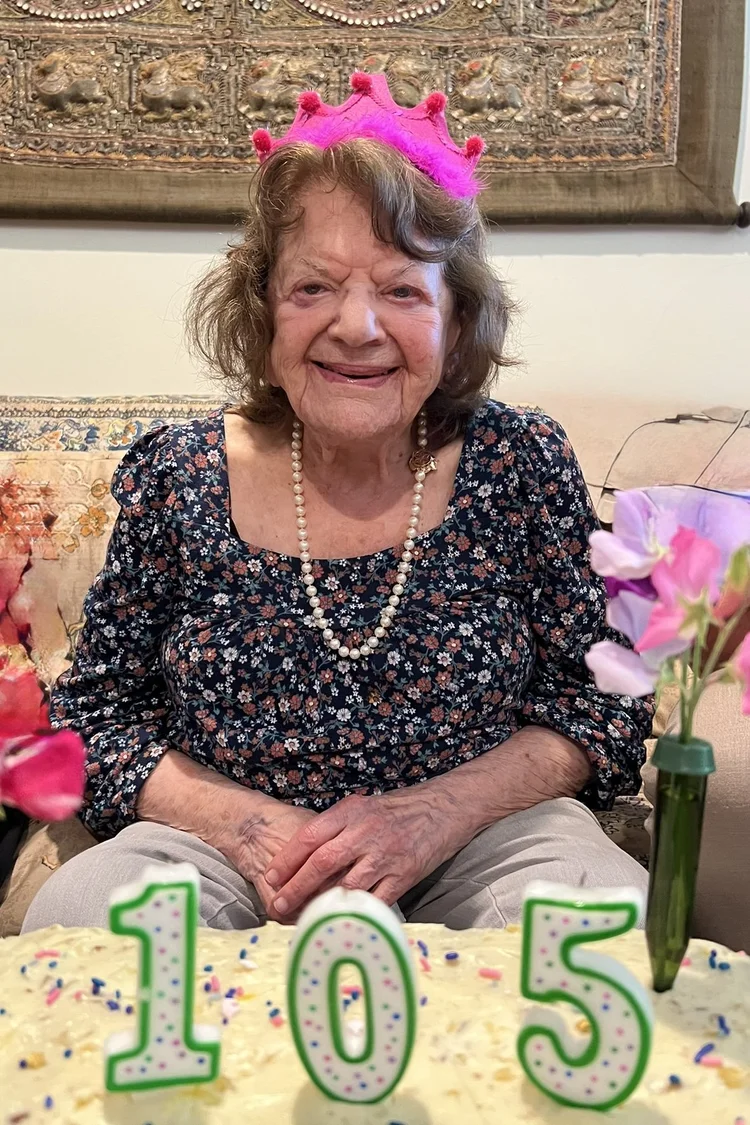
Meet Shirley Ross: Our Oldest GAB Participant, Still Going Strong at 105 Years By Cheryl Svensson |
|
|
|
|
Shirley Ross joined a Guided Autobiography class that Jim Birren and I taught at UCLA back in 2007. At the time, she was in her mid eighties and recently widowed, looking for a way to re-engage with life. She signed up for adult education classes through UCLA—no easy feat, considering the GAB class was held off-campus in a multi-story building in Westwood with expensive parking and a 20-person enrollment. But Shirley, undaunted, drove herself there each week with a smile on her face and a story in hand.. At 105 years old, Shirley Ross is our oldest GAB participant. I was lucky enough to have her in my small group that semester, and we became fast friends. We discovered we share nearly the same birthday—just one day apart, though separated by a few years. Shirley wrote heartfelt stories. Each week, she faithfully read her piece aloud and then mailed a copy to her only son, who lived in Northern California. Even after the class ended, my friendship with Shirley didn’t. I introduced her to a friend in Santa Monica, and they, too, became close. Over the years, I’d visit Shirley every so often—we’d catch up over lunch, and she’d fill me in on life. Today, Shirley can no longer drive due to macular degeneration, but she continues to live independently in her longtime home. She shares her house with Scott, a tall, African American widower who rents a room from her. Scott has become much more than a tenant—he takes Shirley to doctor’s appointments, helps with groceries, and is a steady, supportive presence in her life. He’s lived there for over five years, and the two have grown very close. Shirley just celebrated her 105th birthday on May 29, 2025, and true to form, she threw a party. On May 31, her home was filled with 40–50 guests enjoying a generous buffet, mingling inside and out in the golden Southern California sunshine. The crowd was a mix, ranging in age from 30s to 80s—a testament to Shirley’s ability to connect across generations. Her reach continues to be wide, and her presence continues to be magnetic. I spoke to her a few days after the celebration and asked if she had recovered. She told me it took her some time to bounce back. “I was completely wiped out from all the attention and the flowers and gifts,” she said, with her characteristic humor. “I think that must be what it feels like to be 105.” Whether or not writing your life story will help you live a long and meaningful life like Shirley’s, it certainly won’t hurt to try. If anything, her story reminds us that life story writing and sharing keeps us connected—to ourselves, to others, and to life itself.
|
|
Help! We Need Somebody …
(But not just anybody!)
|
|

|
|
|
|
🌟 Join Us as a Volunteer! Are you passionate about Guided Autobiography (GAB) and excited to contribute to a growing, global community of life story facilitators? We’re looking for creative and committed volunteers to help shape the Birren Center’s future. We’re Seeking Volunteers with: Nonprofit Experience — bring valuable insight to our operations and governance Fundraising — help us grow our resources and reach new supporters Grant Writing — support us in securing funding opportunities Accounting & Bookkeeping — keep our finances healthy, transparent, and organized International GAB Liaison — bring global perspectives into the spotlight Marketing & Outreach — help us spread the word and expand our reach Partnership Development — build connections with like-minded organizations Administrative Support — assist with behind-the-scenes tasks that keep us running smoothly
✨ Why Volunteer? The Birren Center is dedicated to enriching lives through the art of life story writing and sharing. As a volunteer, you’ll be enriched by: helping grow a community that empowers people to find meaning, connection, and healing through Guided Autobiography. collaborating with a wonderful team, develop new skills, and make a meaningful impact on a global scale inspiring more people to tell their stories
Interested? Reach out to us at admin@thebirrencenter.org and tell us how you can contribute.
|
|

|
“Second Chances” Anthology to Feature 58 Essays — Including 5 Spanish Writings
|
|
|
|
|
The call for submissions closed on April 30, reaching the maximum of 100 English submissions just hours before the midnight deadline. The review team’s decisions were communicated to all submitters in mid-June. Thank you to everyone who submitted an essay! By writing it down and sending it for consideration, these GAB instructors and students have accomplished more than most people who say they want to write their story. New This Year: Essays in Spanish For the first time, the Second Chances anthology will feature five essays written in Spanish — each accompanied by its English translation. Volunteer editors are now preparing the accepted essays for publication. Special Thanks to Our Review Team Project Manager Sarah White extends her gratitude to the dedicated reviewers who evaluated over 100 submissions: Spanish Review Team: Camila Reimers, Alicia Borisonik, Liliana Weisbek English Review Team: Sarah White, Roselyn O’Connell, John Countryman, Cheryl Svensson, Peggy Rosen, Alice Gaddi Roselo, Marjorie Hollman
✨ A Reflection on What Makes This Work So Special As our editor, Sarah White, so eloquently put it, the Birren Center’s anthology series “…reflects what makes Guided Autobiography so special: community, courage, and the transformative power of personal narrative. As instructors, we are both witnesses to and facilitators of this magic.” We deeply appreciate everyone who helped bring this effort to life. Coming November 2025 The 2025 Anthology will be available in November 2025. If you’re interested in helping with the book launch marketing campaign, please reach out to Sarah White at: whitesarah.cnf@gmail.com
|
|
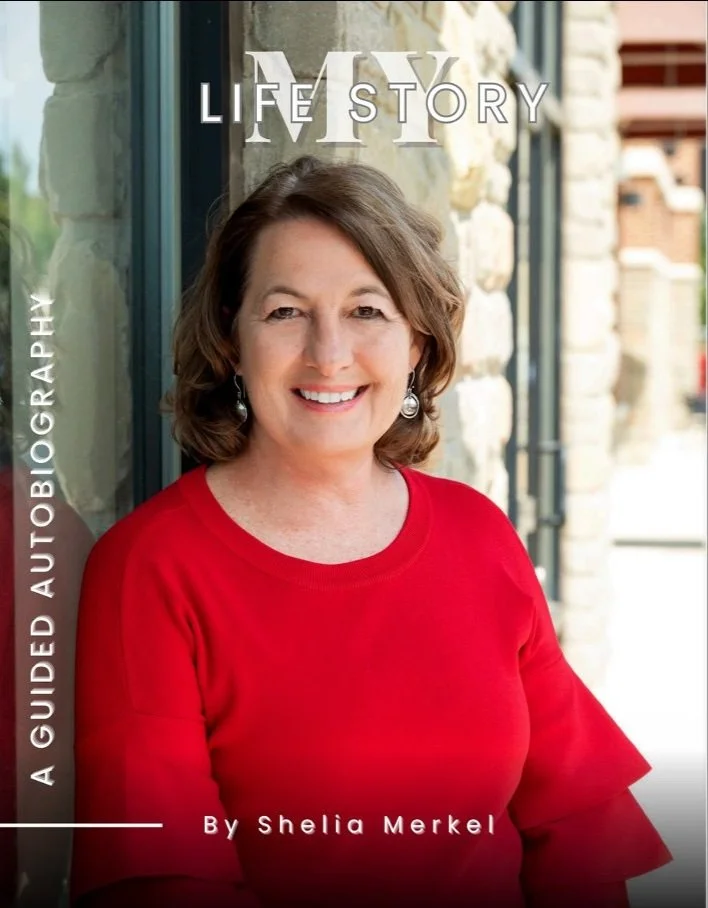
A Participant's Perspective: Shelia’s StoryOne of the most rewarding parts of facilitating Guided Autobiography (GAB) workshops is witnessing how the process helps people uncover, shape, and share the stories that have quietly shaped their lives. I was honored when Shelia Merkel—an experienced storyteller herself and co-founder of LIFEazine—joined my GAB class, not as a collaborator, but simply as a participant ready to explore her own life narrative. What followed was a meaningful journey of reflection, creativity, and connection. With her permission, I’m excited to share Shelia’s thoughtful reflection on the experience—and how it unexpectedly blossomed into a beautiful new project we’re now co-creating. Angela Turner, GAB Instructor |
|
|
|
|
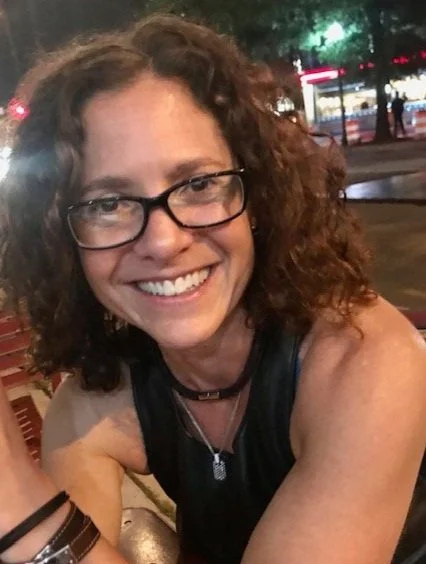
Spotlight OnStefanie Bloom |
|
|
|
|
CARING, SHARING WITH GAB By Barbara Smith As Director of Caring at Temple Rodef Shalom in Falls Church, Virginia, Stefanie Bloom is always looking for new ways to increase connections. A compassionate educator and coach with a doctorate in health education, Stefanie learned about GAB two years ago through a contact at a nearby senior living community. She immediately saw it as a way to build community in her synagogue. “As soon as I read about GAB,” she recalls, “I said, ‘Oh, yes, I’m going to do that!’” She took the training and jumped right in, initially offering GAB in an 8-week in-person course for members of her synagogue. “I wanted to make a smaller community where people can connect and share stories,” she says. With a temple membership of 1800, she aimed to foster smaller, meaningful connections within the larger synagogue community, particularly for members who might be less engaged with traditional religious programs but still wanted to be a part of the community. Using the workbook “Uncovering Treasures That Matter,” co-authored by Cheryl Svensson and Bonnie Bernell, Stefanie developed a series of classes, mostly in person. She experimented with four-, six—and eight-week formats, with varying numbers of members. She is able to offer the classes at no charge, which reduces the marketing pressure that many GAB instructors face and also encourages people to join. Four groups have formed since inception, with one continuing independently and meeting monthly in members’ homes. On one occasion, she offered a class on Zoom, but has found that in-person classes are preferred. She hopes to establish self-sustaining cohorts that foster ongoing relationships. During her training, Stefanie says she never considered herself a writer and felt somewhat intimidated by being in a class with historians and other professionals. However, now she finds it helpful to share those initial concerns with students who may similarly lack confidence. “I pushed through,” she shares, “and ended up loving it. I learned I have a voice, and this is what I instill in my students.” A question that comes up often in the GAB community is how to facilitate around difficult, emotional stories, and certainly for Stefanie, working with a community of Jewish people, many of whom have endured tragedy, presents some challenges but also opportunities. She finds encouraging members to write two stories on the same theme effective. “Very often, the stories we hold are the ones with tragedy. I encourage them to write this story, but then ask, ‘Is there a space for another story,’” possibly a more uplifting one. In this way, the writing becomes therapeutic but not therapy. She says it can be a liberating push to write a complicated, even tragic story, but then allowing the space for another story can offer a new perspective. A particularly poignant moment for Stefanie involved a participant who contributed his writings light-heartedly in jingles rather than prose. “We got a lot of laughs,” she said, realizing these weren’t necessarily stories, but left the space open. Tragically, about four months after the class, the man passed away in an accident. Everyone in the class reached out to one another in their shared experience of knowing this man, who, but for GAB, probably would not have been remembered as a congregant. “It showed how GAB worked. We saw, heard, and witnessed someone’s life. It was only eight weeks, but the impact he left us with was profound.” For the future, she hopes to bring past and current GAB participants together for a Shabbat event, where they can share stories and connect on deeper levels. Another idea in the works is to integrate GAB writing activities into existing synagogue groups, such as older adults' or young moms' monthly meetings. She is also exploring the possibility of a virtual story-sharing event with another instructor who offers classes through her synagogue in another state. “I find, especially since initiating the GAB experience, that people are eager to share and want to be heard. They don’t want to be judged or corrected; they just want to share. As an instructor, I see why we need to do this.” Stefanie’s confluence of caring and sharing with GAB offers new avenues for healing and belonging.
|
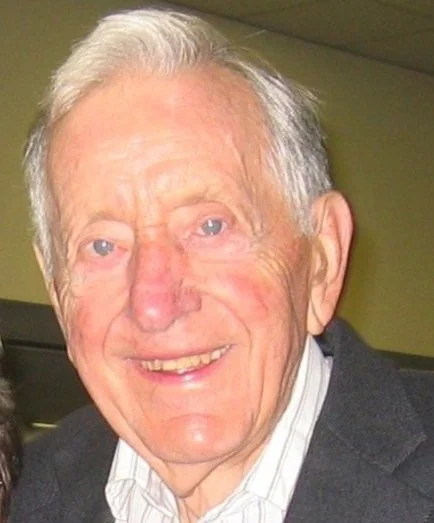
A Series of Q & A with Dr. BirrenAs our founder and friend through GAB, Dr. James Birren had many words of wisdom to share with GAB instructors. Through an online Q & A series with Dr. Cheryl Svensson during her GAB online instructor training sessions from 2010 to 2015, he answered questions from GAB instructors. You may find that you have similar questions. His answers are as relevant and helpful today as they ever were. This is the third in a series of installments devoted to the Birren Q & A. |
|
|
|
|
Question for Dr. Birren: If you were just starting to offer GAB classes, would you try to start an online group or go with an in-person concept? Dr. Birren’s Answer: I would definitely offer an in-person GAB class first. That provides experience in the one-on-one group method with all the nuances this offers. I feel you really learn more from a small group that is sitting around a table face-to-face. Question for Dr. Birren: If you had to narrow the themes down to five, would you select five from the ten already developed, or broaden some topics instead to encompass more of the themes? Dr. Birren’s Answer: The themes I have chosen for GAB are neutrally productive; that is, they provide the opportunity for both positive and negative memories to emerge. Branching Points is a broad theme and can be positive or negative. Both Family and Money might “change” and vacillate between negative and positive memories. Life’s Work/ Career is pretty straightforward and usually just reflects the path taken in life. The final theme, Goals, is always the last theme because everyone needs a reason to get up in the morning, regardless of how old they are. So if I had to choose five of the ten themes to present they would be: Branching Points, Family, Money, Life’s Work and Goals. Question for Dr. Birren: Have you ever experienced GAB being offered as all male or all female class? Dr. Birren’s Answer: When I led the GAB class at the Veteran’s administration, it was all men. As a homogenous group, the members tended to bond quickly. Heterogeneous groups may take a bit longer to open up, but once they do bond, they are very rich in understanding and growth. I tend to emphasize “diversity”, i.e. young-old, male- female, different backgrounds, cultures, ethnicity, etc. The heterogeneity opens up richness in the group. This helps in priming memories and engenders appreciation of diversity. Question for Dr. Birren: Do you have any Birren best practices for teaching GAB? Dr. Birren’s Answer: You will learn many things as you teach GAB classes. You will learn things beyond what your teachers have taught you because each GAB class is different and the challenges and rewards will be different for each one. For instance, I learned from the Vets group that many hold onto surprisingly sensitive areas of their lives for years, or even decades, after their wartime experiences occurred. Some older Vets may begin to cry and have a difficult time “turning it off.” You will learn as you teach. Professor Emeritus James E. “Jim” Birren, the founding dean of the USC Leonard Davis School of Gerontology and an aging-research pioneer considered by many to be the father of modern gerontology, passed away on January 15, 2016, at the age of 97. Remembering James E. Birren
|
|
Shelf-Worthy: Top Picks for Life Story Writers A collection of books on the craft of writing and the benefits of life story writing is an invaluable resource for GAB instructors. Ever had that moment when you needed a bit of wisdom or a curated perspective for inspiration as you planned your next class? Or perhaps a class member asked for recommendations for a great memoir? Let’s build our own GAB Book Resource List! We’re gathering recommendations for the best books on life story writing and memoir to create an annotated bibliography that all GAB instructors can benefit from. How You Can Help: If you’d like to contribute, we’d love your help! Email us at admin@thebirrencenter.org, and we’ll put you to work on this exciting new project.
|
This Edition’s Top PicksThe Gift of Years Growing Older Gracefully, by Joan Chittister: The book offers reflective, wise, and spiritual insights on aging, letting go, forgiveness, and embracing the present — all essential to cultivating inner peace. Each short chapter explores a theme such as regret, joy, freedom, legacy, memories, or meaning, providing rich material for reflection. These themes can serve as writing prompts or discussion springboards in GAB groups, especially those focused on aging, later life, or life review. Chittister writes with compassion, clarity, and poetic insight, making her work both accessible for participants and deeply enriching for facilitators who want to bring greater depth and emotional resonance to their groups. Ways to incorporate the book into a GAB session: Assign or share a short chapter before a session. Use meaningful quotes to introduce or reflect on a theme. Suggest it as an optional read for legacy-focused or aging-related cohorts.
Shelf Worthy Suggestions from Angela Turner, GAB Instructor |
|

|
|

|
If You Want to Write by Brenda Ueland:
(Originally published in 1938; Reprint edition, 2011) Brenda Ueland’s If You Want to Write is a timeless love letter to the creative spirit. First published over 85 years ago, this slender volume continues to inspire generations of writers with its bold assertion: “Everybody is talented, original, and has something important to say.” Ueland, who studied the work of William Blake and shared friendships with literary luminaries like Carl Sandburg, brings a deeply personal, philosophical voice to the subject of writing. Her message? Writing is not reserved for the elite few — it is an essential expression of our inner life, available to all who are willing to be honest, vulnerable, and curious. With wit and warmth, she urges readers to ignore critics, drop pretenses, and reconnect with their “true, honest, un-theoretical” selves — exactly what GAB is all about. The book is not a how-to manual with rigid rules, but rather a call to trust your imagination and let your words flow freely. Her 12 closing points offer practical encouragement, but the real value lies in her unshakeable belief in the creative potential of every individual. Carl Sandburg once called If You Want to Write “the best book ever written on how to write.” It’s easy to see why. This book feels like a conversation with a wise and supportive mentor — one who sees your potential even when you can’t. For anyone who writes — or wants to — it’s an empowering read that reminds us: the act of writing is not just about craft, but about courage, honesty, and joy. Comes highly recommended by Cheryl Svensson for all GAB writers. |
|
|
You The Story: A Writers Guide to Craft Through the Memory, by Ruta Sepetys: Young-adult novelist Ruta Sepetys received so many requests from her readers asking how she shaped her best-selling stories that she turned the spotlight from the award-winning historical fiction she usually writes to explore how she utilizes her own life in the craft of writing. All of her stories start from a nugget of truth, and all of her characters are based on some reality in her life. By using memory as the basis for her characters, her writing comes alive. Now we’re lucky that she shares some of her tricks in a very readable book. Even though I write and teach memoir, I read You: The Story eagerly. The prompts made me recall many events in my own life that would make great stories for a GAB collection. After all, as GAB writers, we may be writing memoir, but at its heart, memoir is a story — the story of our lives. Everybody has a story, and when we mine our stories for all their rich detail, that’s when our pieces start to sing. Any of the twelve archetypes Sepetys presents on page 31 can be translated to someone in my life. When I think about my life unfolding through this framework, suddenly I have fascinating stories leaping out of my own life. We all do. We just need to look at our lives through fresh eyes. I highly recommend GAB instructors try You: The Story to enhance their own GAB curriculum and personal memoir writing. Everyone has a story; we just need the right prompt to bring it to the forefront. The plethora of prompts in You: The Story, as well as the different perspectives to use when considering the answers, make it a veritable treasure trove of GAB material in a very fun read! Recommendation by Ansley Dauenhauer, GAB Instructor |
|

|
|
|
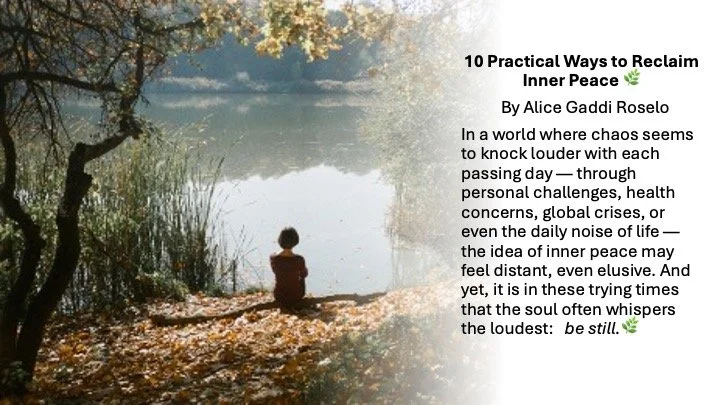
As life story writers and GAB instructors, we know that peace is not the absence of struggle but the presence of a deeper connection to our truest selves. Writing our stories—especially those that tell our journey through the storms —can be a powerful pathway to reclaiming that peace. Our stories become both refuge and reflection, reminding us that the anchor of inner peace lies within. 10 Other Practical Ways to Reclaim Inner Peace 1. Write Through the Storm Use journaling or GAB storytelling to process emotions, name your fears, and find clarity. Even a single paragraph can release a burden. 2. Create a “Peace Corner” Dedicate a space in your home with calming elements — a candle, a quote, a plant, a photo. Go there daily for five minutes of intentional quiet. 3. Breathe Consciously When anxiety flares, practice slow, mindful breathing. Inhale for 4 counts, hold for 4, exhale for 6. Repeat. The breath is the gateway to stillness. 4. Limit Noise — External and Internal Reduce media intake. Step away from social media. Notice the thoughts that rise in the silence. Which ones are truth? Which are clutter? 5. Walk Slowly—Feel Deeply. Take a short, deliberate walk. Feel the ground beneath your feet. Notice colors, sounds, smells. Let your body and mind slow down together.
|
“When we are no longer able to change a situation, we are challenged to change ourselves.”
— Viktor E. Frankl
|
|
|

|
|
|
7. Connect with Nature Sit under a tree. Watch the clouds. Dig your hands in soil. Nature reminds us of rhythms beyond our control and teaches acceptance. 8. Share Your Story — Honestly Tell someone a true story of how you made it through something difficult. Let the telling and the being heard be part of the healing. 9. Return to What Soothes Your Soul Whether it's music, prayer, poetry, or a simple ritual from childhood — return to the familiar things that have always calmed your spirit. 10. Trust the Ebb and Flow Remember: peace is not permanent nor perfect. It visits, sometimes fleetingly. But your story proves — you’ve survived storms before. ✨ May these practices help you reclaim your inner calm — and remind you that your story is a powerful anchor in any storm.
|
|
The GAB Gazette is a bi-monthly
publication from the Birren Center. GAB Gazette Team Editor: Cheryl Svensson Our Team: Melissa Coats, Ansley Dauenhauer, Alice Gaddi Roselo, Roselyn O’Connell, Barbara Smith, and Angela Turner
|
|
|
|